Analysis of Plotinus’ - Ennead 1.1 On the animate man
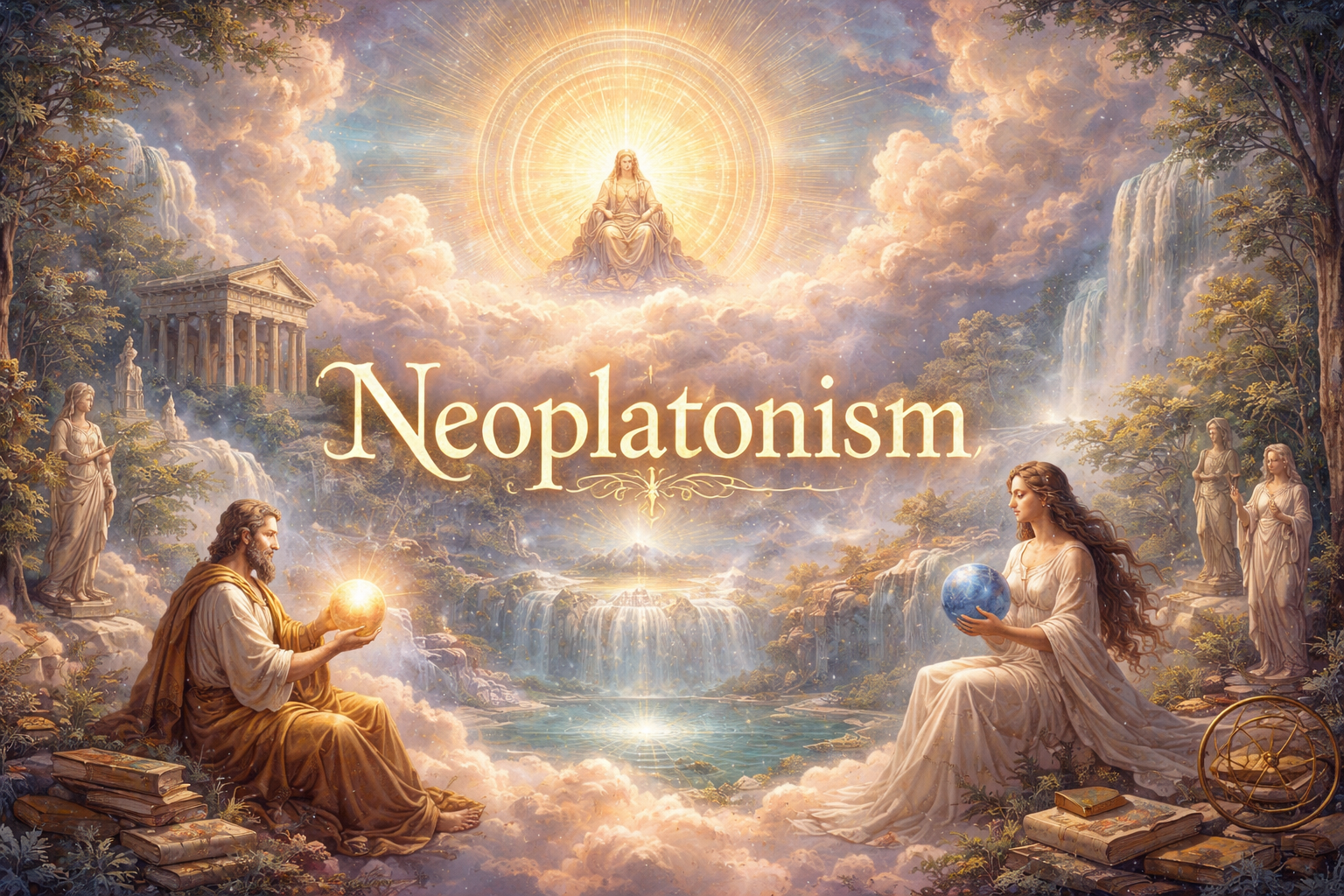
For Plotinus, the human being is fundamentally an animate soul inhabiting a body. His philosophy, developed in the tradition of Plato and later known as Neoplatonism, describes the soul as a living principle that bridges the material and the divine. Understanding the animate nature of man therefore reveals not only what life is, but also humanity’s potential to return to its highest source.
The first Ennead, although one of the last Enneads composed by Plotinus, is placed first by Porphyry. This Ennead examines the soul or the Self, sense perception and its relationship to the soul, particularly the challenges that arise from sense perception. He begins by analysing the nature of pleasure and distress, fear and courage, desire and aversion. With these concepts in mind, he poses several questions: where do these affections originate? Where do we experience them? Where does discursive reason reside? Do they reside within the soul, in sense perception, or in experiences? What about intellection?
I: What is the soul?
To understand this, we must first comprehend what the soul is; then we may gain a clearer understanding of where these modes reside. The soul, from the outset, has two distinct aspects: one being the individual soul and the second being the universal soul. It is essential to differentiate between these two phases or aspects of the unified nature of the soul, which is fundamentally one. Thus, the individual and the universal (essential) soul are one and the same. Here, Plotinus departs from the notion of the soul being composed of parts. The individual soul is that which experiences the physical world. In this respect, the higher divine soul becomes entangled in the material world. From the material realm, numerous experiences are shared by what is referred to as the individual soul. The individual soul is essentially the universal soul, with its fragmented light illuminating all existence, including all beings, ourselves included. In fact, the perception of a separate individual soul, having a distinct existence, is a fallacy. The universal soul is eternal and unchanging, existing in the intelligible realm prior to physical existence, serving as an intermediary between the One and the material world.
With these distinctions in mind, I will continue where Plotinus discusses the nature of the soul. If the soul is merely an individual entity residing solely in the composite body, then the sense perceptions and emotions we experience directly impact the soul and leave impressions on it. However, if the soul is purely essential or universal, imperishable and changeless, then sense perception and emotions cannot affect the universal soul. This is because, if it is unchanging and eternal, nothing can alter the universal soul, meaning sense perception and emotions have no seat or effect on the essential soul.
II: The soul in relation to the body and material world
Next, Plotinus inquires whether the soul uses the body as an instrument. It cannot be presumed that the soul will feel the effects of the body. Plotinus employs the analogy of a tool; when one uses a tool, it does not feel the effects that the tool may encounter. Affections pertaining to a body can be experienced by another body, but a body, being material, cannot transfer its affections to that which is immaterial. The soul, being immaterial, cannot experience the effects of the body or be impressed upon by it. As previously mentioned, the soul is unchanging. Given that the body and soul are two distinct entities, they cannot share affections.
Plotinus then explores whether the soul is interwoven with the body, whether it is an ideal form detached from it, or whether this ideal form governs the body. Alternatively, he considers whether the soul is partly attached to the universal soul and partly to the material world and body. It is this notion of being both attached and detached that Plotinus adopts. As stated earlier, the individual and universal soul are one and the same; the universal is in close contact with the One and the divine, while the individual is in contact with the material world.
If the soul is interwoven within the body, then it will experience all that the body does, including all its affections, even death. Whatever the body feels and experiences, the soul will also feel and experience. However, since Plotinus asserts that the soul is eternal and unchanging, it cannot be interwoven within the body. To do so would entail experiencing death and decay, which contradicts the earlier assertion regarding the soul's eternal and unchanging nature. As the body experiences affections such as desire and fear, these experiences are limited to the body and do not extend to the soul. Since the body is animated, it will acquire all the affections it possesses. Furthermore, as affections and sensations affect and alter the body, they cannot impact the soul due to its unchanging and eternal nature. The soul cannot be said to be interwoven with the body in a physical sense. It will permeate the body while remaining unchanged and unaffected by the body's affections. The soul is not confined to any part of the body, just as light rays are not confined to any particular space. With this immaterial perspective in mind, the soul cannot be influenced by the affections of the body.
Subsequently, Plotinus essentially asks: what gives life to the body? Is it the body itself? Is it the union of body and soul? Or is it something else?
III. Soul being the provider of life
For the moment, he dismisses the notion of the body being solely responsible for life and moves on to the concept of their coupling. He particularly discusses how an unwelcome state arising within the body reaches the sense faculty, which subsequently merges with the soul. This does not clarify sense perception in depth; it merely illustrates how it occurs, not where it resides. When a person is in distress, they form opinions and judgments regarding their experiences. For example, one may perceive evil in some form yet not experience grief; this is because a judgment and opinion are formed, to which they are not physically affected. To illustrate, one may contemplate an evil deed committed by another; from this, they form an opinion and judgment. Although not physically affected, they still experience distress regarding the evil act and have thus formed a judgment about it. However, this leaves the question unresolved as to whether the judgment is located within the soul or in the union of both body and soul. It remains unclear in which domain such appetitive or desire faculties exist—whether in the union, solely in the body, or solely in the soul. Carnal desires are found within the body, but the impulse towards the Good cannot be an affection of the body; it must belong solely to the soul. Nevertheless, since one can experience both carnal desires and an impulse towards the Good, it cannot be said to be shared by both the soul and the body.
Plotinus goes on to say that when a power has with it a recipient, the power remains unaffected by what the recipient experiences. Or to put it simply, the cause of having an effect, isn't affected by what the effect experiences. Or rather a fire causes heat, but the fire itself isn't affected by heat; it emits heat. If this the case, take the body and soul, the soul is power, the body is the recipient. What is the animate or body recipient of? Life. The soul gives life to the couplement. The soul for Plotinus doesn't give itself to the body, instead it gives off its essence or radiance. To illustrate this better he used light. A light shines yet the source is unaffected by the things it shines it light on. In like manner, the soul (universal) emits a light from itself to all animate being. As such, a sense of individual soul is formed. From this shinning of light and bestowing life, it shines on a distinct principle (animate). This animate body is itself vested with sense perception and all other affections that go with the body. All these faculties are by product of the body, not the soul directly. Though the soul is responsible for the animate receiving life. But the soul itself remains unaffected by sense perception and the affections of the body, much like how the light is unaffected by that which it shines on.
IV. The intellect and sense perception
From this animate, along with the faculties intellect, reason, sense perception and affections a “we” is formed or rather our individual selves. Plotinus suggests that sense perception cannot act on the physical objects alone. The impressions we receive are revived from the ideal forms because the sense objects themselves are a mirror or the Forms. But since we are the universal soul, that resides within the intelligible realm, which includes the Forms, we can grasp the forms. When in the body, this can be done by using discursive reasoning, intellection and sense-knowledge. All of which is illumated and bestowed by the Ideal Forms. This authentic human principle stands about the animate. Or in other words the universal soul, which is what we are, stands about the individual soul, shedding light on the animate. The reasoning is a characteristic of the soul.
Plotinus moves on to discuss what our relation is to the divine mind (Nous). Plotinus says we possess this as the summit of our being (universal soul). The divine mind is different from the universal soul, but we are connected to it. This is because both the universal and divine mind reside with in the intelligible realm. The divine mind is everywhere and assessable to all to every individual soul. The universal soul has it always, the individual soul, may sometimes have it or sometimes not. By have it he means being consciously connected to it.
V. How do we possess divinity?
Divinity is poised on the intellectual principle (nous) and the authentic existence (universal soul). The individual soul comes third by as previously mentioned a mergence of the universal and individual soul, which forms a “we”. By thinking ourselves as individual, which has been indicated earlier as a falsity, we don’t think we possess divinity. But when we realise we are the universal soul, that has access to the Nous, we are divine. This is because both the universal and Nous (forms), being intelligible, are divine; we by extension are divine. This “we” is the individual soul, which is nothing more than the universal soul, merging into the body, without change in itself. This mergence creates individual animate beings such as humans. The couplement of universal soul and the body, generate sense perception, simply as a by product of the coupling, not by the soul itself. All of this is owing to the life principle that the soul emits. From what has been said, we possess divinity and our soul, remains unaffected by the bodies affections. Said affections and sense perception are only experienced by the body, not the soul itself. The physical objects are merely a reflection the intelligible and ideal forms.
VI. How evil effects us
The next point is made as to how the soul can go guiltless and unblamed for evil or bad acts.
It has been suggested that the soul does not share in the afflictions experienced by the body. The soul is eternal and unchanging. Since evil and similar influences affect us, they impact only the soul, not the body. The evils we encounter cause numerous changes, both mentally and physically, to the body, but they do not touch the soul, which remains unchanged. In summary, the evils that affect the couplement only impact the animate (body).
As the reasoning faculty and discursive reasoning are located within the lower aspect of our being, we are often deceived by the illusion that we are merely a separate soul and/or material body. This line of reasoning stems from a lower form of knowledge. As previously mentioned, the true self is the universal soul, which is one with all. The illusion arises when we fail to recognise that we are part of this universal essence and mistakenly identify solely with our separate, animate existence. In this state, we align ourselves only with this lower aspect of ourselves. Consequently, we become subject to evil due to ignorance and a strong identification with this lower state. The universal soul remains unaffected by this; only the individual "me" is impacted. Moreover, as Plotinus posits, evils affect the body exclusively.
Plotinus suggests that we embody evil when we rely solely on lower, base forms of reasoning. This lower reasoning neglects the Nous. When sense perception is coupled with lower reasoning, illusions are generated that deceive the soul. This occurs because the true ideal forms are obscured. Without perceiving these ideal forms, we fail to see things as they truly are. Therefore, they appear more like shadows or reflections. While the reflection is real in a limited sense, it is not the true object it represents. Similarly, sense objects and the material world are merely reflections of the ideal forms, which are eternal and unchanging. Since they are only reflections, they are less real than the forms themselves. As we possess innate sense perception within the animate body, the soul cannot be blamed for our entrapment in sense perception and its illusions. Should the individual soul reconnect with the universal, which is in constant contact with the Nous, we will perceive things as they truly are. In this way, we will no longer be deceived by illusion, and evils will diminish.
Evil arises when the universal soul is drawn into the material world, forming an individual self or soul. Another aspect of our illusion is our strong identification with the animate body and all that accompanies it. A further illusion emerges when we forget or disregard the universal soul, which, as I have stated, is our true essence. Finally, we are deceived when we are not in contact with the Nous, which is always connected to the universal soul. The soul cannot be held accountable for the evils faced by the animate body in these instances of deception.
VII. How we can avoid evil
In regard to the couplement, Plotinus has elucidated two aspects: the soul and the body. The animate body, with all its characteristics, remains tied to the body. The soul has no need for the body, which it animates. The soul possesses the judgement by which it evaluates sense perception. It does this by perceiving the forms through the means of intellection. Consequently, sense perception, along with the vision of the ideal forms possessed by the universal soul, employs reasoning, judgement, and intellect to assess sense perception. Throughout this process, the soul remains unchanged and unaffected by the afflictions of the body and sense perception.
Plotinus anticipates an objection: if the soul constitutes the "we" or personality, then surely it is subject to this "we."
Plotinus responds that prior to the emancipation or realisation of the divine and universal soul, which constitutes our true nature, the couplement represents the "we." As long as we believe this is our sole identity, we are subject to this "we." This, as previously mentioned, is a significant illusion; we are subject to the illusion, not merely to the "we." Upon emancipation, we are no longer bound by the "we." What is subject to the "we" is not the soul itself, but rather the body and the ignorance it engenders. The soul itself remains untouched and unaffected. Plotinus states that, due to the couplement, the merging of the universal soul and body, we can at one time be subject solely to the brute aspect (body). Alternatively, we can transcend the body, residing within the soul, which is connected to the universal soul, possessing the Nous or intellect and virtue inherent to the individual soul. We can choose to withdraw within the soul or turn towards the animate and its myriad troubles. Virtue and vice are components of the couplement, with the former belonging to the individual soul and the latter to the animate body. Thus, while we may be subject to the body, we can also retreat within the soul, where the body becomes subject to virtue, intellection, and wisdom (Nous).
Plotinus observes that in our youth, we are predominantly affected by the animate and base aspects of ourselves. Although the soul is always in contact with the universal soul, the divine and Nous, we do not recognise this, as the animate body exerts more influence over us. The higher aspects only impact us when we consciously engage with them or when we occupy a midpoint between body and soul. At this juncture, we are influenced not only by the body, as we perceive it, but also by the soul.
VIII. The empancipation
To address any objections regarding blame and guilt attributed to the soul, Plotinus simply asserts that the individual soul and universal soul are one. As previously noted, the soul is unchanging and unaffected by the body and its evils. True blame and guilt reside solely within the body and arise when we identify exclusively with the material body, disregarding the union of the universal and individual soul. As there exists an unbroken unity, the soul cannot incur guilt or blame. Blame may also arise when the individual soul is subjected to the animate.
Evil commences when the soul descends into the material world, thus forming the couplement of soul and body. To comprehend the true nature of the soul, we must mentally detach it from its body and withdraw within the soul. From this authentic understanding, existence is attained. Any and all accretions, as Plotinus states, that develop as a result of existing within a body and material world should be relinquished. This can be accomplished by turning inward towards the soul and its divinity and Nous. When the soul directs its gaze towards the supreme being, the One or universal soul, the illusions of the material world's shadows cease to exert their influence. We can liberate ourselves from the constraints imposed by the material world, provided we don't identify with this individual "we." When the soul seeks the supreme, the evils associated with the animate body and the material world no longer disturb us. The unification of the universal and individual soul destroys all illusions and ignorance generated by the animate body and the material world.
Plotinus ultimately asserts that we do not possess a soul; we ARE the universal and individual soul. To claim possession implies that the soul belongs to the body or something else; it does not. Upon realising this, the distinction of "we" as a separate entity dissipates. There is no "we" in reality that possesses the soul; we are the soul. The universal and individual soul are one and the same. The universal soul, or all soul, and the individual soul embody the Nous to which they belong.